

.jpg)

.jpg)
A New Era of Cleaner, Faster, and More Precise Surface Preparation
In modern manufacturing, surface preparation is a critical step that directly affects product quality, production efficiency, and long-term reliability.
From automotive components and aerospace parts to shipbuilding, steel structures, and precision manufacturing, industries require more efficient and reliable cleaning solutions to remove rust, paint, oil, oxide layers, and other surface contaminants.
For decades, traditional methods such as sandblasting, chemical cleaning, and mechanical grinding have been widely used. However, as manufacturing continues to move toward higher precision and environmental sustainability, these methods are facing increasing challenges.
High labor requirements, material damage risks, chemical waste, and inconsistent cleaning results have encouraged manufacturers to explore more advanced alternatives.
This is where laser cleaning technology is becoming an important solution for the future of industrial surface treatment.
Why More Manufacturers Are Choosing Laser Cleaning Technology
Laser cleaning is an advanced surface treatment process that uses a controlled laser beam to remove unwanted materials from the surface of a workpiece.
Unlike traditional cleaning methods, laser cleaning does not rely on chemicals, abrasive materials, or direct mechanical contact. Instead, it uses precise laser energy to remove contaminants layer by layer while protecting the original substrate.
This technology provides several advantages:
1. Non-contact cleaning process
2. No chemical waste generation
3. Reduced material damage risk
4. Higher cleaning precision
5. Lower maintenance requirements
6. Better environmental performance
These advantages make laser cleaning increasingly attractive for manufacturers looking to improve production efficiency and achieve cleaner processing results.
Traditional Cleaning Methods vs Laser Cleaning
Different industries have different requirements for surface treatment. While traditional methods remain useful in some applications, laser cleaning offers new possibilities for precision manufacturing.
| Cleaning Method | Common Challenges |
|---|---|
| Sandblasting | Generates abrasive waste and may damage delicate surfaces |
| Chemical Cleaning | Requires chemical handling and disposal |
| Mechanical Grinding | High labor intensity and inconsistent results |
| Laser Cleaning | Precise, flexible, and environmentally friendly |
For manufacturers working with high-value components or complex surfaces, laser cleaning provides a more controlled and efficient approach.
How Laser Cleaning Works: Precision Through Controlled Laser Energy
The working principle of laser cleaning is based on controlled laser ablation.
When the laser beam interacts with contaminants on the surface, the energy difference between the coating layer and the base material allows unwanted materials to be removed without affecting the workpiece.
By adjusting key parameters such as:
1. Laser power
2. Pulse width
3. Frequency
4. Scanning speed
5. Cleaning path
operators can optimize the process for different materials and applications.
This precise control is especially important when cleaning:
1. Stainless steel
2. Aluminum alloys
3. Precision components
4. Reflective materials
5. Industrial equipment parts
MOPA Laser Technology Expands Laser Cleaning Applications
With the development of fiber laser technology, MOPA laser sources have become increasingly important in industrial cleaning applications.
MOPA (Master Oscillator Power Amplifier) technology provides more flexible pulse control, allowing users to achieve better cleaning performance across different materials.
Compared with conventional laser sources, MOPA technology offers:
1. Flexible pulse adjustment
2. Better heat control
3. Improved surface protection
4. Wider application range
These characteristics make MOPA laser cleaning suitable for applications where precision and material protection are essential.
The Growing Role of Handheld Laser Cleaning Machines
Industrial customers are not only looking for high-performance equipment but also for solutions that are flexible and easy to operate.
This has driven the development of handheld laser cleaning machines.
Compared with large fixed cleaning systems, handheld laser cleaners provide:
1. Easy transportation between work areas
2. Flexible operation for complex components
3. Reduced setup time
4. Convenient maintenance applications
They are becoming an effective solution for workshops, repair facilities, and industrial production environments.
Future Trends: Intelligent and Sustainable Surface Treatment
As global manufacturing continues to focus on automation, efficiency, and environmental responsibility, laser cleaning technology will continue to evolve.
Future developments are expected to include:
1. More intelligent parameter control
2. Higher automation levels
3. Improved processing efficiency
4. Broader material compatibility
Laser cleaning is not simply replacing traditional methods; it is becoming part of a smarter and more sustainable manufacturing ecosystem.
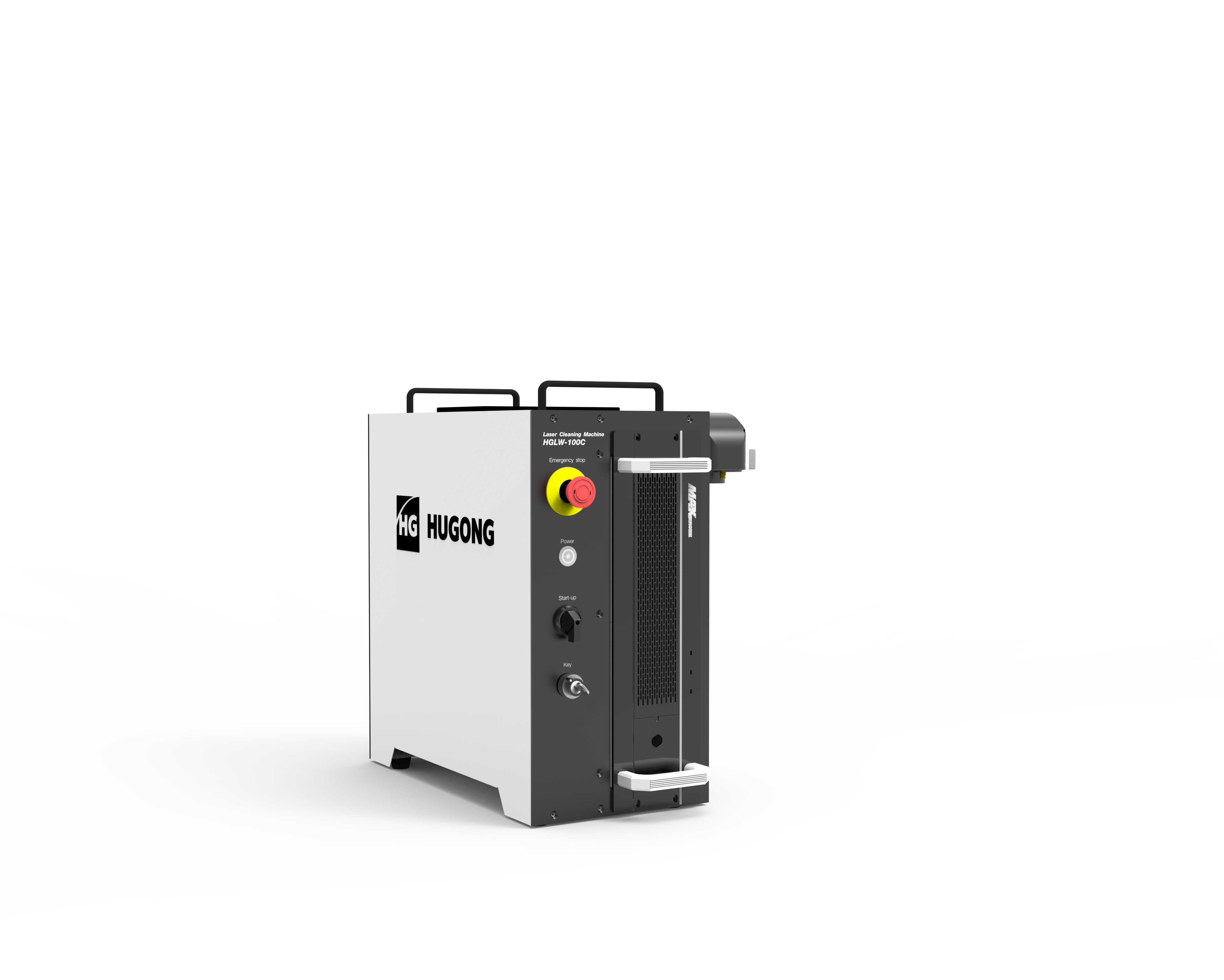
HUGONG HGLC MOPA Handheld Laser Cleaning Machine: Compact Design, Professional Performance
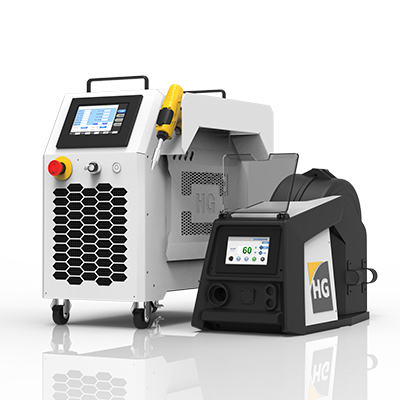
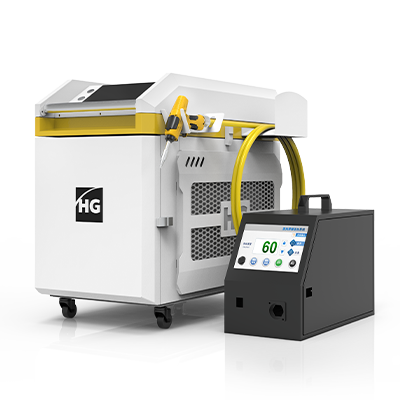
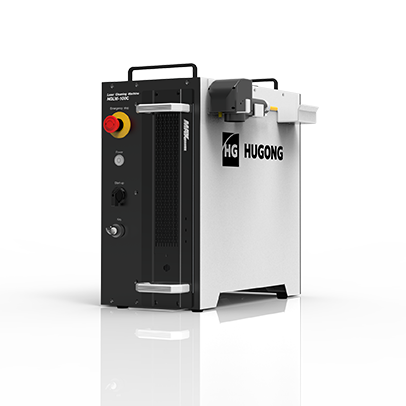
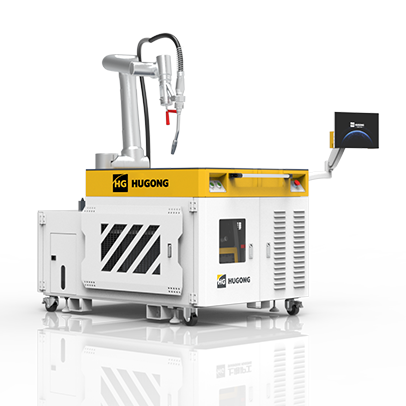
To support the growing demand for efficient industrial cleaning solutions, HUGONG developed the HGLC-100/200/300 MOPA Handheld Laser Cleaning Machine.
Designed for industrial surface treatment, the HGLC Series supports multiple cleaning applications, including:
1. Rust removal
2. Paint removal
3. Glue removal
4. Oil removal
5. Oxide layer removal
6. Fine surface cleaning
The machine adopts MOPA laser technology with a 1060–1070 nm wavelength, providing flexible cleaning performance for different materials and applications.
Equipped with a HUGONG wobble laser cleaning head, the system features:
1. Double-axis swing mode
2. 180 × 180 mm cleaning range
3. Lightweight 0.85 kg cleaning torch
4. 5 m cable length
5. Air cooling system
The HGLC Series is available in three configurations:
| Model | Maximum Power Consumption |
| HGLC-100 MOPA | 0.5kW |
| HGLC-200 MOPA | 1 kW |
| HGLC-300 MOPA | 1.3 kW |
With a compact handheld design and reliable performance, the HGLC Series provides manufacturers with a practical solution for modern industrial surface cleaning.
See Laser Cleaning Technology in Action:Rust, paint, glue… GONE in seconds!
FAQ
1. What can laser cleaning remove?
Laser cleaning can remove rust, paint, oil, oxide layers, glue, and other surface contaminants from various materials.
2. Is laser cleaning better than sandblasting?
Laser cleaning provides a more precise and environmentally friendly solution without abrasive materials or chemical waste.
3. Can laser cleaning damage metal surfaces?
With optimized parameters, laser cleaning can remove contaminants while protecting the base material.
4. What industries use laser cleaning machines?
Laser cleaning is widely used in automotive, aerospace, shipbuilding, metal fabrication, and industrial maintenance.
Conclusion
As manufacturing moves toward higher precision and more sustainable production, laser cleaning technology is becoming a key solution for industrial surface treatment.
By combining advanced MOPA laser technology, flexible handheld design, and precise cleaning control, HUGONG HGLC Series Laser Cleaning Machine helps manufacturers improve efficiency, reduce processing limitations, and achieve higher-quality results.
HUGONG — Advanced Welding and Cutting Solutions for Global Manufacturing.

 Address:7177 Waiqingsong Road.Qingpu District , Shanghai , PRC
 Post Code: 201700
 E-mail:sales@hugong.com
 Tel:0086-21-51211666
 Fax:+86-21-69715399


