

.jpg)

.jpg)
Handheld Air-Cooled Fiber Laser Welding Machines: Why Compact 3-in-1 Solutions Are Shaping Modern Metal Fabrication
Manufacturing is evolving faster than ever. Across Europe, North America, Southeast Asia, and the Middle East, fabricators are under pressure to produce higher-quality products with fewer skilled workers, lower operating costs, and more flexible production lines.
At the same time, customers are demanding shorter lead times, customized orders, and consistent welding quality. These changing requirements are accelerating the adoption of laser welding technology, particularly handheld fiber laser welding machines, which combine speed, precision, and ease of operation.
Among the latest innovations, air-cooled handheld laser welding machines have emerged as one of the fastest-growing segments of the market. By eliminating the need for bulky water chillers while maintaining excellent welding performance, they provide manufacturers with a practical solution for modern workshops where efficiency, portability, and space utilization are critical.
Why the Global Market Is Moving Toward Air-Cooled Laser Welding
The welding industry is experiencing a noticeable shift.
Traditionally, water-cooled laser welding machines have been the standard choice for high-power industrial production. However, many small and medium-sized manufacturers no longer require oversized systems designed exclusively for continuous heavy-duty operation.
Instead, today's fabrication businesses are looking for equipment that offers greater flexibility, lower maintenance costs, and faster deployment.
Several market trends are driving this transition:
1. Skilled welder shortages are increasing in many developed countries, encouraging manufacturers to invest in equipment that is easier to learn and operate.
2. Workshop space is becoming more valuable, making compact equipment a practical investment.
3. Manufacturers are seeking multi-functional equipment capable of handling welding, cleaning, and cutting without purchasing separate systems.
4. Energy efficiency and reduced maintenance requirements are becoming increasingly important purchasing factors.
5. More fabrication companies are accepting customized, low-volume production, where flexibility matters more than maximum output.
For these reasons, compact air-cooled laser welding systems are rapidly becoming a preferred solution for workshops focused on productivity and cost control.
Why More Manufacturers Are Choosing Handheld Laser Welding
Compared with traditional MIG and TIG welding, handheld laser welding offers several operational advantages.
1. Higher Welding Efficiency
Laser welding can significantly increase production speed while maintaining consistent weld quality. Faster travel speeds reduce production cycles and improve throughput.
2. Cleaner Weld Appearance
The concentrated laser beam creates a narrow heat-affected zone, producing smooth weld seams that often require little or no grinding or polishing.
3. Reduced Heat Distortion
Because less heat enters the workpiece, thin stainless steel and aluminum components experience less deformation.
4. Easier Operator Training
Modern handheld laser welding systems simplify parameter adjustment, helping new operators become productive more quickly than with traditional welding processes.
5. Lower Total Operating Cost
Improved efficiency, reduced post-processing, and lower maintenance contribute to lower production costs over the lifetime of the equipment.
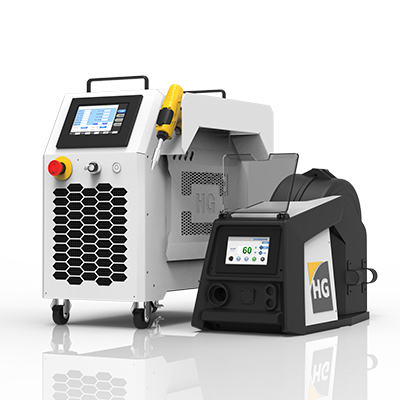
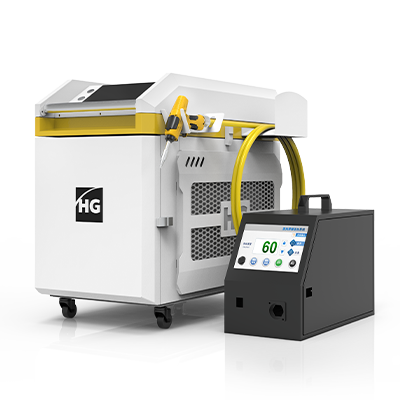
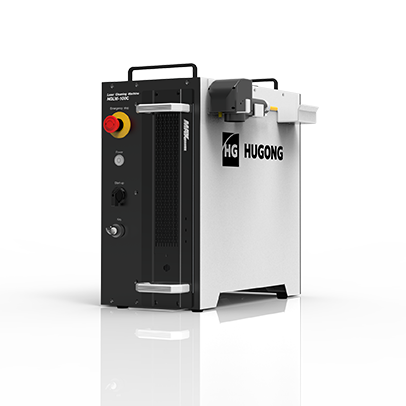
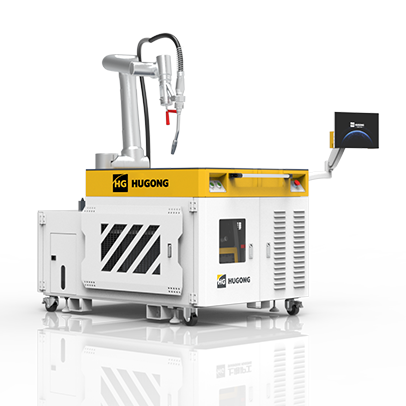
Introducing the HUGONG HGLW-AIR Series
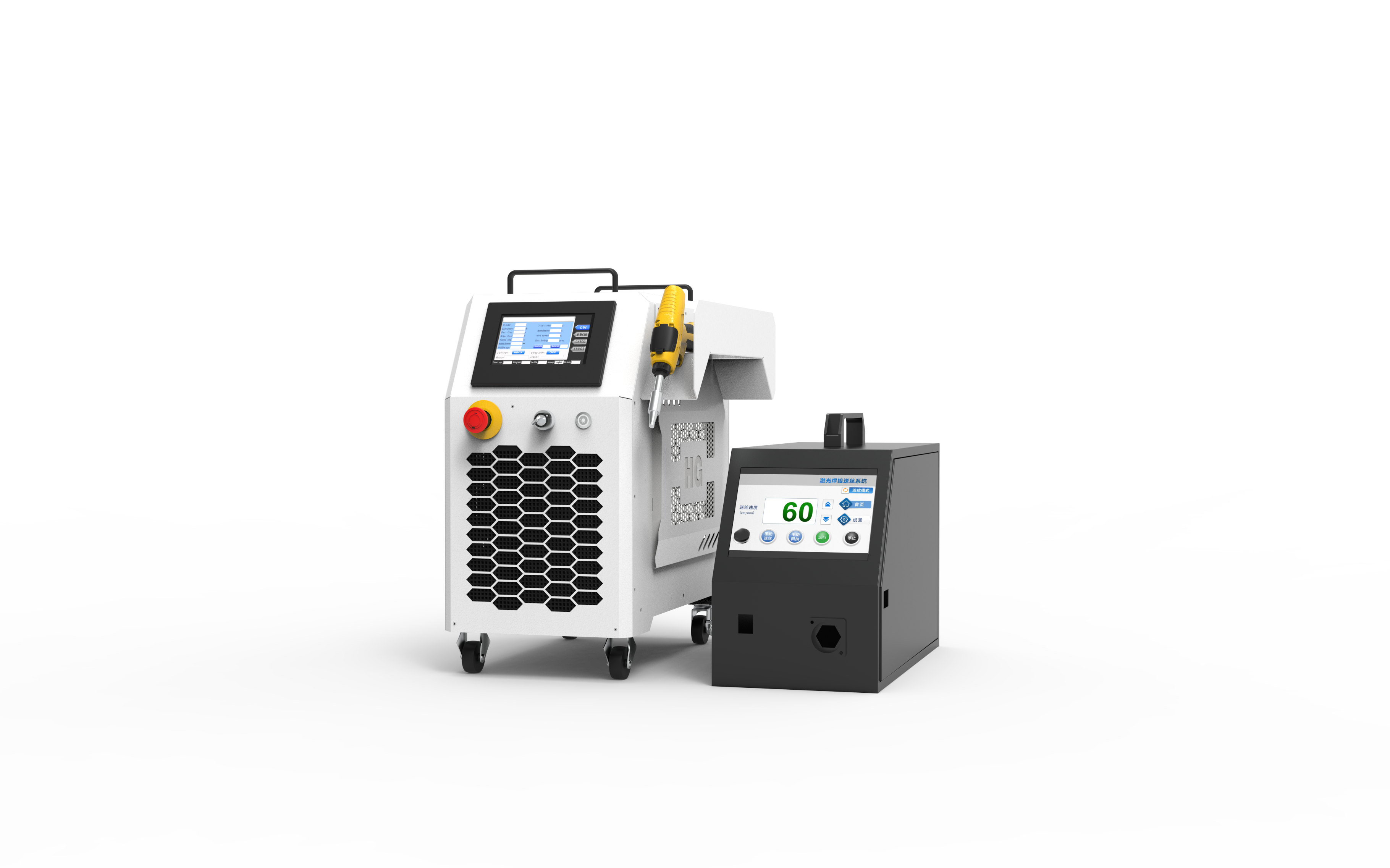
To meet the changing needs of global fabricators, HUGONG developed the HGLW-830AIR, HGLW-1240AIR, and HGLW-1545AIR.
Designed around the concept of compact efficiency, the HGLW-AIR Series integrates three essential manufacturing processes into a single platform:
1. Fiber Laser Welding
2. Laser Cleaning
3. Laser Cutting
Instead of investing in multiple machines, manufacturers can complete a wider range of fabrication tasks using one compact system.
This approach not only reduces equipment investment but also simplifies workflow management and saves valuable workshop space.
Engineered for Practical Industrial Applications
The HGLW-AIR Series focuses on real-world usability rather than unnecessary complexity.
Key features include:
1. Compact footprint for space-saving installation
2. Air-cooling system with simplified maintenance
3. Intelligent operating interface with parameter memory
4. Wobble laser welding technology for wider weld seams
5. Lightweight 0.8 kg welding torch for improved ergonomics
6. 5-meter cable for greater working flexibility
7. Support for 0.8–1.6 mm wire diameters
8. Compatible with Ar, N₂, and CO₂ shielding gases
These features allow operators to work comfortably during extended production while maintaining stable welding performance.
Flexible Performance for Multiple Materials
The HGLW-AIR Series is suitable for processing a wide variety of commonly used industrial metals, including:
1. Carbon Steel
2. Stainless Steel
3. Aluminum Alloy
4. Galvanized Steel
Depending on the selected model, the machines can process:
| Model | Stainless Steel/Carbon Steel | Aluminum |
| HGLW-830AIR | 1-3mm | Up to 2 mm |
| HGLW-1240AIR | 1-4mm | Up to 3mm |
| HGLW-1545AIR | 1-5mm | Up to 4 mm |
This flexibility makes the machines suitable for both customized fabrication and medium-volume production.
Industries That Benefit from Air-Cooled Laser Welding
The compact design makes the HGLW-AIR Series suitable for numerous industries, including:
1. Sheet metal fabrication
2. Stainless steel furniture
3. Kitchen equipment
4. Elevator manufacturing
5. Electrical cabinets
6. Automotive repair
7. Agricultural machinery
8. Metal doors and windows
9. Decorative metal products
10General industrial manufacturing
Whether installed in a production workshop or transported for onsite maintenance, the machine provides manufacturers with greater operational flexibility.
Air-Cooled vs. Water-Cooled Laser Welding Machines
Many buyers ask whether an air-cooled or water-cooled laser welder is the better choice. The answer depends on the application.
Air-cooled systems are ideal for manufacturers who value portability, simplified maintenance, and a compact footprint. They are especially suitable for small and medium-sized workshops, mobile service teams, and businesses handling varied production tasks.
Water-cooled systems remain the preferred option for extremely high-power, continuous-duty production environments where maximum output is the primary requirement.
For many fabrication companies, air-cooled systems provide the best balance between performance, operating cost, and flexibility.
FAQ
Q:Is an air-cooled laser welder powerful enough for industrial use?
A:Yes. Modern air-cooled systems are designed for a wide range of industrial fabrication applications while offering simpler installation and maintenance than traditional water-cooled equipment.
Q:Can one machine really perform welding, cleaning, and cutting?
A:Yes. The HGLW-AIR Series integrates these three functions into a single platform, allowing manufacturers to switch between processes according to production requirements.
Q:Which materials can be welded?
A:The machine is suitable for stainless steel, carbon steel, aluminum alloy, galvanized steel, and many other common industrial materials.
Q:Is handheld laser welding easier than TIG welding?
A:For many applications, handheld laser welding requires less operator experience while delivering cleaner welds and higher productivity.
The Future of Flexible Welding Starts Here
As manufacturing continues to evolve, equipment that combines flexibility, efficiency, and simplicity will play an increasingly important role.
The HUGONG HGLW-AIR Series reflects this trend by bringing welding, cleaning, and cutting together in one compact, air-cooled solution designed for modern fabrication businesses.
Whether you are upgrading from traditional welding equipment or expanding your production capabilities, choosing a compact handheld fiber laser welding machine can help improve productivity, reduce maintenance, and support long-term business growth.

 Address:7177 Waiqingsong Road.Qingpu District , Shanghai , PRC
 Post Code: 201700
 E-mail:sales@hugong.com
 Tel:0086-21-51211666
 Fax:+86-21-69715399


