

.jpg)

.jpg)
Laser Cutting Automation Is Becoming the New Standard for Modern Manufacturing
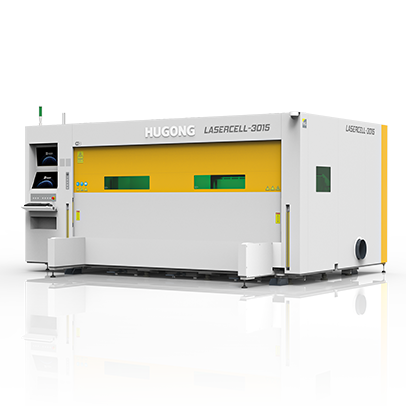
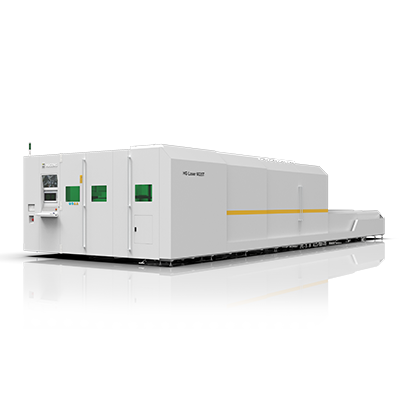
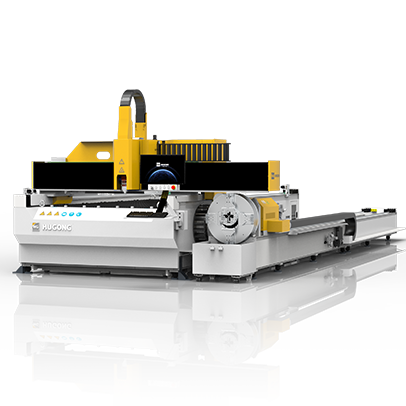
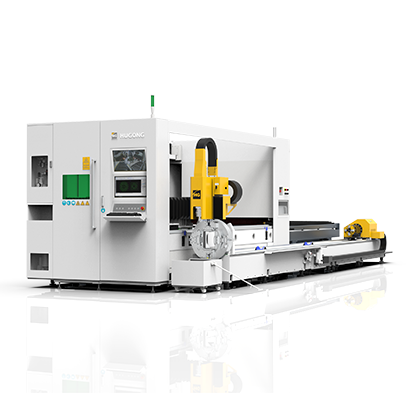
Across the global manufacturing industry, automation is no longer reserved for large-scale factories. Today, manufacturers of all sizes are investing in laser cutting automation to improve productivity, reduce operating costs, and remain competitive in an increasingly demanding market.
Several global trends are accelerating this transformation. Rising labor costs, persistent shortages of skilled machine operators, increasing energy prices, and the growing demand for shorter lead times are pushing manufacturers to rethink traditional production methods. At the same time, customers expect greater flexibility, faster delivery, and consistently high product quality.
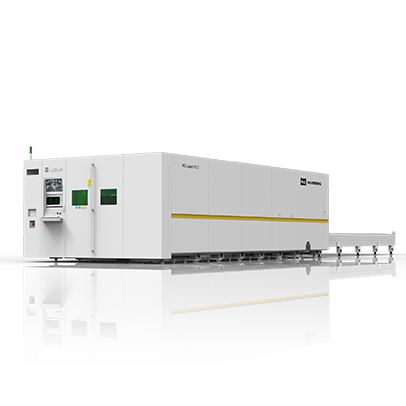
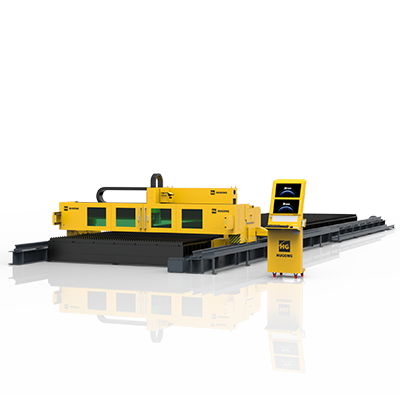
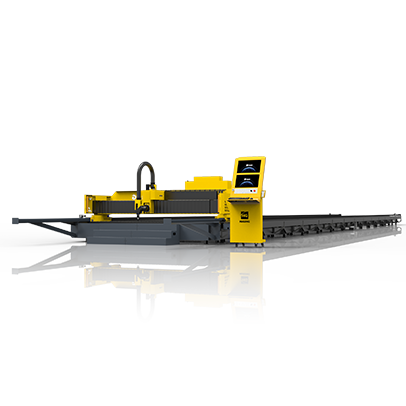
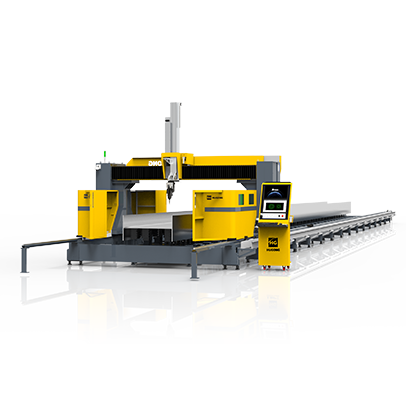
As a result, many metal fabrication companies are moving beyond standalone fiber laser cutting machines and adopting integrated automation systems that combine automatic loading and unloading, intelligent material storage, and digital production management into a single workflow.
Why Manual Material Handling Is Limiting Production Efficiency
Modern fiber laser cutting machines are capable of extremely high cutting speeds. However, in many workshops, productivity is still constrained by manual material handling rather than cutting performance.
Operators often spend valuable time loading steel sheets, removing finished parts, transporting materials, and preparing the next job. During these operations, the laser machine remains idle, reducing overall equipment utilization.
For manufacturers producing multiple orders each day, these interruptions can significantly impact production capacity.
An automatic loading and unloading system addresses this challenge by ensuring a continuous material flow. While one sheet is being processed, the next can already be prepared, minimizing downtime and maximizing machine utilization.
This not only increases productivity but also creates a safer and more organized working environment.
Labor Shortages Are Accelerating Factory Automation
One of the biggest challenges facing manufacturers today is the shortage of skilled labor.
Across Europe and North America, companies continue to experience difficulty recruiting experienced machine operators. Even when labor is available, rising wages and employee turnover make manual production increasingly expensive.
Rather than relying on additional operators, manufacturers are investing in automation systems that enable machines to operate with minimal human intervention.
Automated loading, unloading, and material transportation reduce repetitive manual tasks while allowing skilled employees to focus on programming, quality control, and higher-value production activities.
For many manufacturers, automation is no longer simply about reducing labor costs—it is about ensuring production continuity.
Intelligent Material Storage Supports Flexible Manufacturing
Modern manufacturing increasingly requires high-mix, low-volume production, where different materials, thicknesses, and job orders must be processed efficiently throughout the day.
Traditional warehouses often struggle to support these fast-changing production schedules.
An intelligent material storage system provides centralized inventory management, rapid material retrieval, and automatic sheet delivery to the laser cutting machine.
The advantages include:
1. Faster material access
2. Better inventory visibility
3. Improved warehouse organization
4. Reduced forklift traffic
5. More efficient use of factory space
6. Faster job changeovers
This flexibility allows manufacturers to respond more quickly to customer orders while maintaining high production efficiency.
Connecting Multiple Laser Cutting Machines Through Smart Automation
As production capacity grows, many factories operate multiple fiber laser cutting machines simultaneously.
Without an integrated logistics system, coordinating raw materials and finished parts between machines becomes increasingly complex.
A laser cutting logistics automation system connects multiple cutting machines through a centralized material handling network. Materials are automatically transported, stored, and distributed according to production schedules, reducing manual coordination and improving workflow consistency.
This integrated approach enables manufacturers to:
1. Increase machine utilization
2. Optimize production scheduling
3. Reduce waiting time between jobs
4. Improve overall factory efficiency
5. Support future production expansion
The modular design also allows businesses to expand automation capacity as production requirements evolve.
Continuous Production Improves Equipment Utilization
Machine productivity is measured not only by cutting speed but also by how consistently equipment operates throughout the day.
With automated loading and unloading, manufacturers can significantly reduce idle time between jobs and support continuous unattended operation during evening shifts, weekends, or extended production runs.
Instead of stopping production whenever materials need to be replaced, the automation system ensures that the next production cycle begins immediately.
This continuous workflow helps manufacturers:
1. Increase machine uptime
2. Improve production stability
3. Meet tight delivery schedules
4. Reduce production bottlenecks
Higher equipment utilization ultimately lowers the cost per finished part and improves return on investment.
Supporting Industry 4.0 and Smart Factory Development
Automation is also a critical component of the global transition toward Industry 4.0.
Today's manufacturers increasingly require production systems capable of exchanging real-time data between machines, storage systems, and factory management software.
Through IoT connectivity, intelligent automation systems provide greater visibility into production status, inventory levels, machine utilization, and workflow performance.
This digital integration enables manufacturers to make faster production decisions while improving planning accuracy and operational transparency.
As more factories pursue digital transformation initiatives, connected automation systems are becoming a strategic investment rather than an optional upgrade.
HUGONG HGTOWER System: A Scalable Automation Solution
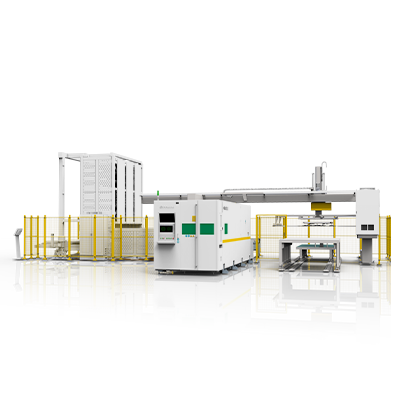
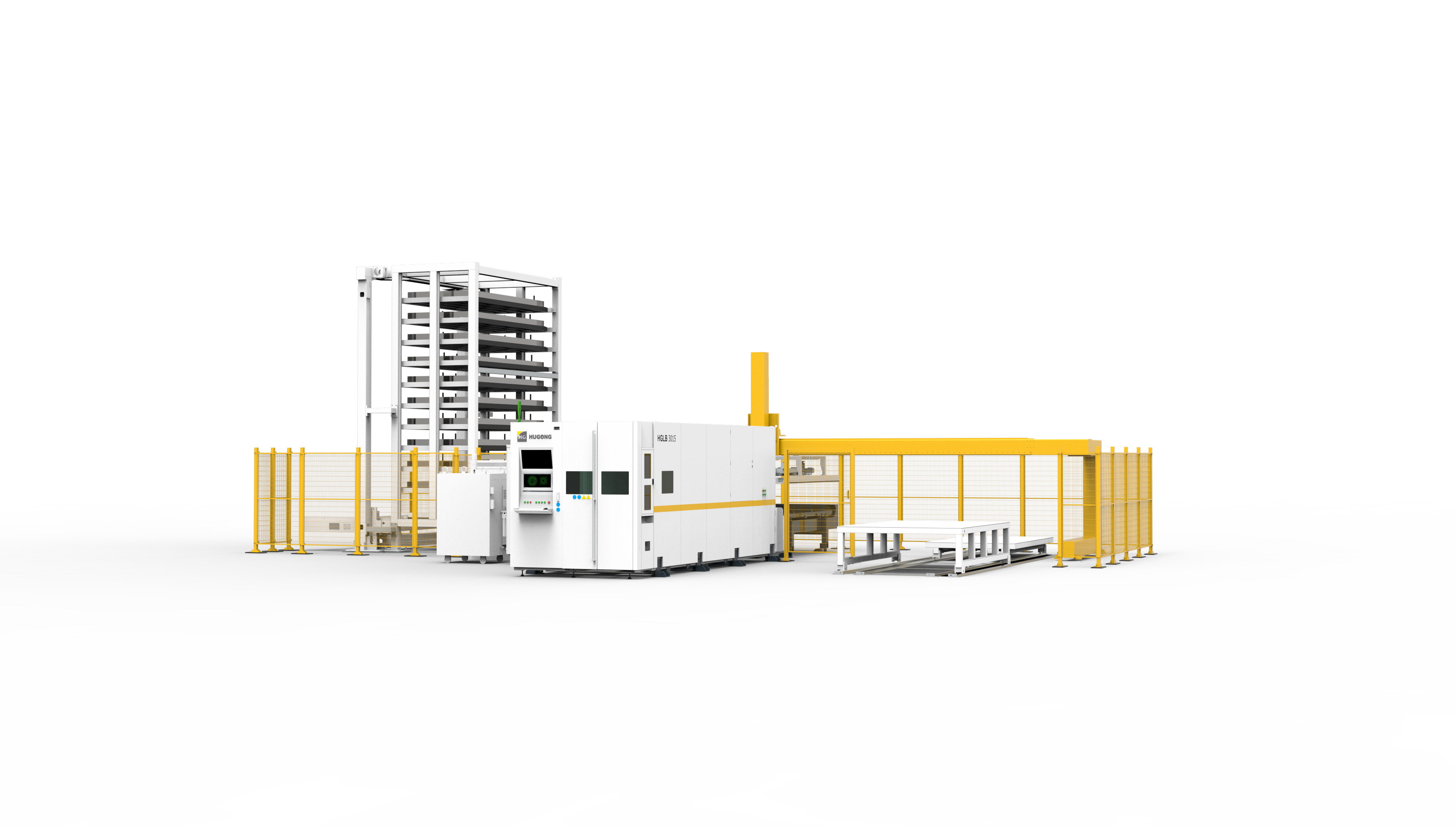
Designed for modern sheet metal fabrication, the HUGONG HGTOWER System integrates automatic loading, intelligent material storage, automated unloading, and multi-machine connectivity into a single modular platform.
The system supports manufacturers seeking to increase productivity while reducing manual intervention and optimizing factory space.
Key features include:
1. Automatic loading and unloading
2. Intelligent material warehouse
3. Multi-machine connectivity
4. Automated material logistics
5. Modular system architecture
6. Continuous unattended operation
7. Smart production management
Its scalable design allows manufacturers to configure automation solutions according to factory size, production volume, and future expansion requirements.
Whether producing construction equipment, agricultural machinery, electrical cabinets, automotive components, elevators, steel structures, or custom sheet metal products, the HGTOWER System helps manufacturers build a more efficient and intelligent production line.
Choosing the Right Automation System
When evaluating a laser cutting automation solution, manufacturers should consider more than loading speed alone.
An effective system should also provide:
1. Flexible expansion capability
2. Compatibility with multiple laser cutting machines
3. Intelligent warehouse management
4. Stable long-term operation
5. Easy maintenance
6. Digital connectivity for future smart factory upgrades
Selecting a scalable automation platform ensures that production can continue growing without major system redesigns.
The Future of Laser Cutting Is Intelligent Automation
Global manufacturing continues to evolve toward higher efficiency, greater flexibility, and increased digitalization.
Manufacturers that invest in intelligent automation today are better positioned to overcome labor shortages, improve production consistency, reduce operating costs, and respond more quickly to changing market demands.
As Industry 4.0 adoption accelerates across the world, integrated laser cutting automation will play an increasingly important role in building competitive, resilient, and future-ready manufacturing operations.
FAQ
1.What is a laser cutting automation system?
A laser cutting automation system combines automatic loading, unloading, material storage, and production logistics to improve the efficiency of fiber laser cutting operations while reducing manual intervention.
2.What are the benefits of automatic loading and unloading?
Automatic loading systems reduce machine idle time, improve operator safety, increase equipment utilization, and enable continuous production with minimal labor requirements.
3.Is laser cutting automation suitable for small and medium-sized manufacturers?
Yes. Modern modular automation systems can be configured according to production volume and factory size, making them suitable for both growing businesses and large-scale manufacturers.
4.Which industries benefit most from laser cutting automation?
Industries including sheet metal fabrication, automotive, agricultural machinery, electrical equipment, steel structures, elevators, construction machinery, and contract manufacturing can all benefit from automated laser cutting solutions.

 Address:7177 Waiqingsong Road.Qingpu District , Shanghai , PRC
 Post Code: 201700
 E-mail:sales@hugong.com
 Tel:0086-21-51211666
 Fax:+86-21-69715399


