

.jpg)

.jpg)
Large Diameter CNC Pipe Cutting Machine Buyer's Guide 2026: Top Suppliers, Selection Tips & Market Trends
Introduction
The global market for large-diameter pipe cutting equipment is expanding rapidly. Valued at approximately $637 million in 2025**, it is projected to reach **$1.09 billion by 2032, growing at a CAGR of over 8% according to industry analysts.
This growth is fueled by large-scale infrastructure investments in oil & gas transmission, LNG terminals, offshore wind farms, and renewable energy projects worldwide.
For fabrication shops, steel structure manufacturers, and pipeline contractors, selecting the right Large Diameter CNC Pipe Cutting Machine has become a strategic decision—one that directly impacts production capacity, labor costs, and competitiveness in an increasingly demanding global market.
This buyer’s guide covers:
1. Current market trends driving demand.
2. Common fabrication challenges and how to solve them.
3. Plasma vs. flame cutting: which is right for you?
4. 3-axis vs. 5-axis: what level of automation do you need?
5. Key selection criteria when evaluating suppliers.
6. How HUGONG MAXPIPE Series fits into the modern fabrication landscape.
7. FAQ section with answers to the most common buyer questions.
Why Demand for Large-Diameter Pipe Cutting Machines Is Growing
Several interconnected trends are accelerating investment in automated pipe cutting equipment.
1. Expansion of Oil & Gas Infrastructure
Global energy demand continues to rise, driving new pipeline construction, LNG terminal expansions, and refinery upgrades. Projects in North America, the Middle East, and Southeast Asia require large-diameter pipes (Φ800–Φ2000 mm) for high-volume transmission systems.
2. Offshore and Renewable Energy Projects
Offshore wind farms, floating production storage and offloading (FPSO) vessels, and hydrogen transport infrastructure all demand high-precision pipe profiling and weld preparation. These applications require cutting accuracy that manual methods simply cannot achieve.
3. Escalating Labor Costs and Skilled Worker Shortages
Fabricators worldwide face a growing shortage of skilled pipe fitters, welders, and cutting operators. In the U.S. and Europe, labor costs have risen sharply, while in emerging markets, finding and retaining skilled operators remains a persistent challenge.
Automation allows fabricators to:
• Maintain consistent production output.
• Reduce dependence on manual labor.
• Lower training costs and onboarding time.
4. Stricter Quality Standards
Modern engineering specifications demand tighter tolerances, superior fit-up accuracy, and consistent weld preparation. Many projects now require:
• Bevel angles accurate to within ±1°.
• Surface roughness below defined thresholds.
• Repeatable cut quality across hundreds or thousands of pieces.
Challenges in Large-Diameter Pipe Fabrication
Processing pipes with diameters ranging from 800 mm to 2000 mm presents unique manufacturing challenges that manual or semi-automatic methods often cannot overcome.
Common Fabrication Pain Points
| Challenge | Impact on Production |
|---|---|
| Manual marking errors | Misaligned cuts, wasted material, rework |
| Inconsistent cut quality | Poor weld fit-up, increased grinding |
| Long setup times | Reduced throughput, project delays |
| Excessive grinding and rework | Higher labor and consumable costs |
| Difficult bevel preparation | Welding defects, failed inspections |
| Complex pipe intersections | Inaccurate joints, structural weakness |
| Low production efficiency | Missed delivery deadlines, reduced profitability |
How CNC Automation Solves These Issues
| Pain Point | CNC Solution |
|---|---|
| Manual marking | Digital programming eliminates layout errors |
| Inconsistent cuts | Repeatable CNC precision |
| Long setup | Pre-programmed profiles for instant recall |
| Grinding rework | Smooth, accurate cuts minimize post-processing |
| Bevel difficulty | Multi-axis cutting produces ready-to-weld bevels |
| Complex intersections | 5-axis profiling handles saddle, fish-mouth, and T-joints |
| Low efficiency | High-speed cutting with continuous operation |
Plasma vs. Flame Pipe Cutting: Which Is Better?
This is one of the most frequently asked questions by buyers. The answer depends on your material type, thickness range, and production requirements.
Plasma Cutting
Best for:
1. Carbon steel (5–80 mm).
2. Stainless steel.
3. Alloy steel.
4. Non-ferrous metals.
Advantages:
1. Faster cutting speeds (500–2000 mm/min)
2. Superior edge quality with minimal dross
3. Reduced heat-affected zone (HAZ)
4. Lower secondary processing costs
5. Higher productivity for most fabrication shops
Disadvantages:
1. Higher consumable cost compared to flame.
2. Limited performance on very thick materials (>80 mm).
Flame Cutting
Best for:
Thick carbon steel (up to 300 mm+).
Advantages:
1. Lower operating costs on thick materials.
2 Excellent capability for heavy-duty applications.
3. Simpler equipment, easier maintenance.
Disadvantages:
1. Slower cutting speeds (100–750 mm/min).
2. Wider kerf and rougher edge quality.
3. More post-processing required.
4. Larger heat-affected zone.
Which Should You Choose?
For most modern fabrication shops, a dual-process system that supports both plasma and flame cutting offers maximum flexibility. This allows you to:
• Use plasma for speed and quality on thin to medium thicknesses.
• Switch to flame for extremely thick carbon steel sections.
• Adapt to changing project requirements without additional equipment investment.
3-Axis vs. 5-Axis Pipe Cutting Machines
Another critical decision is the level of axis control your applications require.
3-Axis Machines
Suitable for:
1. Straight cuts (square ends).
2. Basic pipe profiling.
3. Standard fabrication applications.
4. Projects with simple geometry requirements.
Limitations:
1. Cannot perform complex bevel cuts.
2. Limited capability for intersecting pipe joints.
3. Additional manual fitting required for complex assemblies.
5-Axis Machines
Suitable for:
1.Complex pipe intersections (saddle, T-joint, fish-mouth).
2. Multi-angle bevel cutting.
3. Advanced weld preparation (J-groove, double-V, compound bevels).
4. Offshore, energy, and heavy engineering projects.
Advantages:
1. Reduces downstream welding and fitting work.
2. Improves joint fit-up accuracy.
3. Minimizes grinding and rework.
4.Enables more complex design geometries.
Buying Recommendation
If you primarily process straight pipes with standard ends, a 3-axis system may be sufficient. However, for manufacturers handling complex pipe assemblies—especially in oil & gas, offshore, or structural steel—a 5-axis system delivers significant long-term ROI through reduced labor and improved quality.
Key Factors to Consider When Buying a CNC Pipe Cutting Machine
Before making an investment decision, evaluate these critical factors:
1. Pipe Diameter Capacity
Ensure the machine can handle your current pipe sizes as well as future project requirements. Many buyers underestimate future needs—choosing a machine with additional capacity often proves cost-effective in the long run.
Industry benchmark: Machines covering Φ800–Φ2000 mm accommodate the majority of large-diameter pipeline projects.
2. Load Capacity
Large-diameter pipes are heavy. A single 12-meter section of Φ2000 mm steel pipe can weigh over 10,000 kg. The machine’s support system must:
• Safely handle maximum workpiece weight.
• Maintain alignment during rotation.
• Support consistent cutting accuracy under load.
3. Axis Configuration
Match the axis system to your application complexity (see 3-axis vs. 5-axis comparison above).
4. Cutting Technology Compatibility
Dual-process capability (plasma + flame) provides the greatest flexibility and protects your investment against changing project requirements.
5. CNC Control and Software
Advanced software features significantly impact programming efficiency and cutting accuracy. Look for:
• Intuitive user interface.
• 3D simulation and nesting capabilities.
• Compatibility with standard CAD/CAM formats (DXF, DWG, IGES).
• Offline programming options.
• Remote diagnostic support.
6. Build Quality and Structural Integrity
Large-diameter cutting demands robust mechanical construction. Evaluate:
• Bed and gantry rigidity.
• Drive system quality (rack and pinion, linear guides).
• Torch height control accuracy.
• Overall machine stability under load.
7. Supplier Reputation and After-Sales Support
Reliable technical support is essential for minimizing downtime. Assess potential suppliers on:
• Track record in your industry.
• Service network coverage.
• Spare parts availability.
• Training and installation support.
• Warranty terms.
HUGONG MAXPIPE Series: Engineered for Large-Diameter Pipe Processing
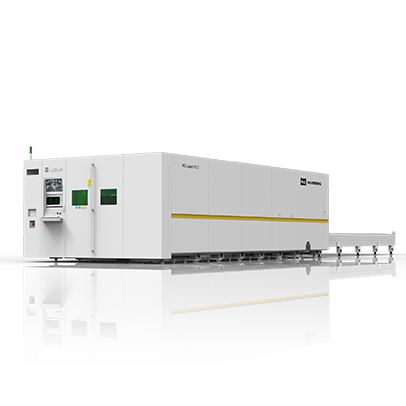
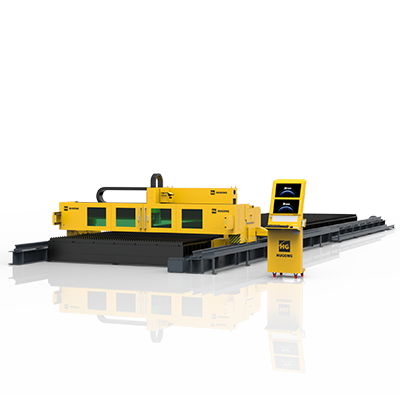
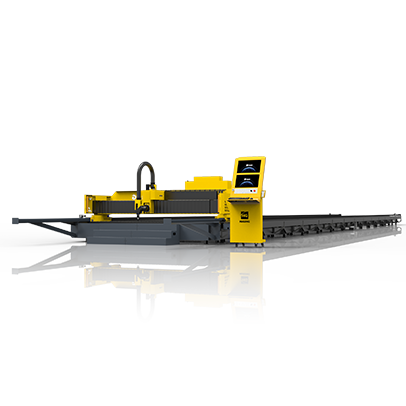
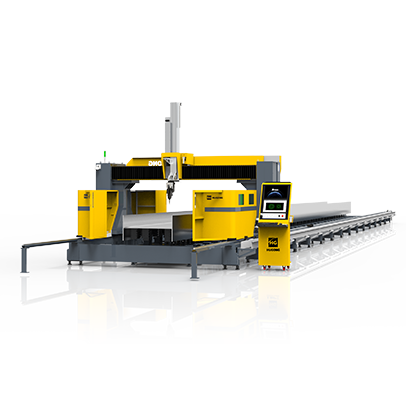
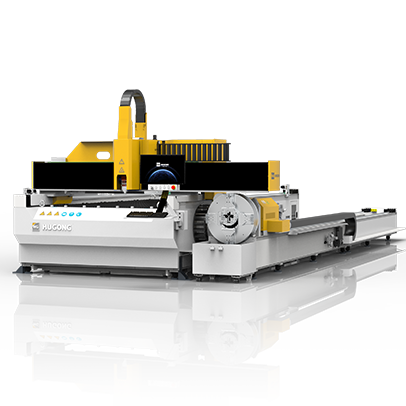
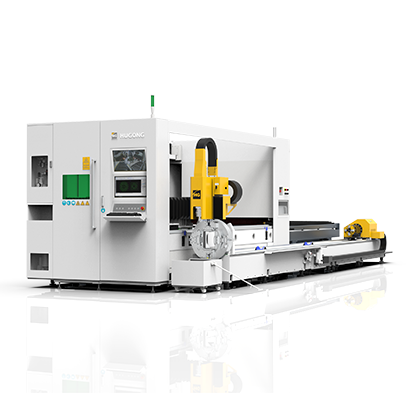
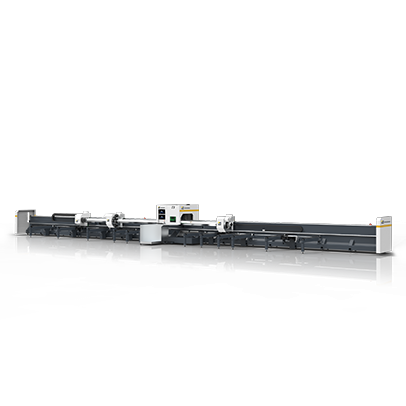
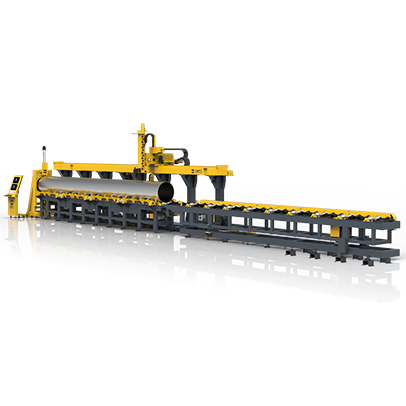
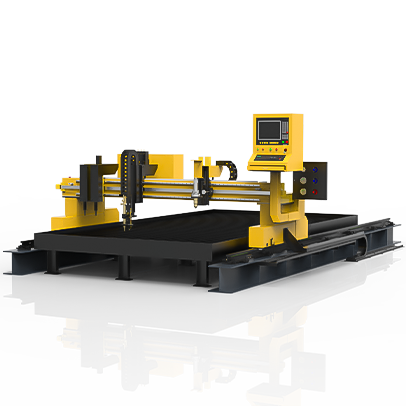
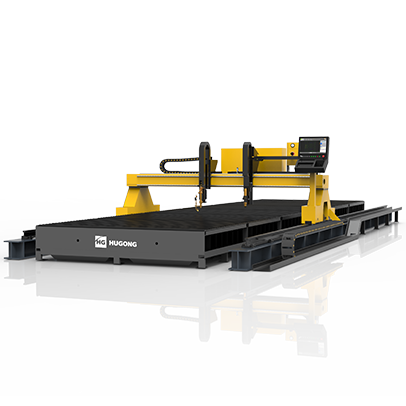
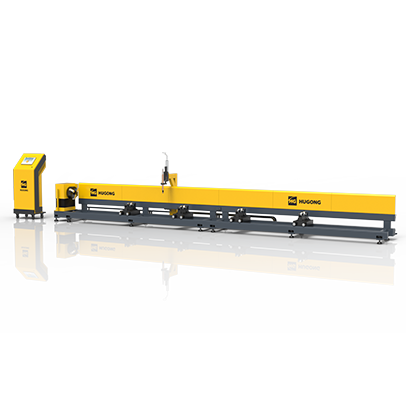
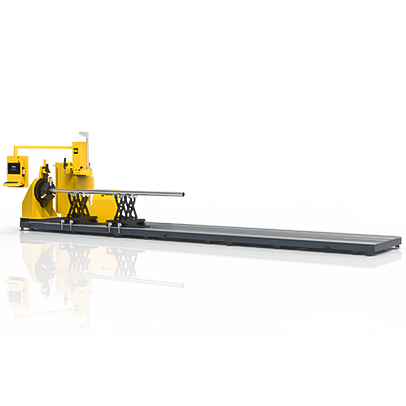
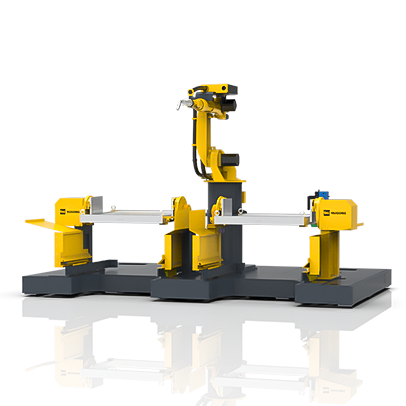
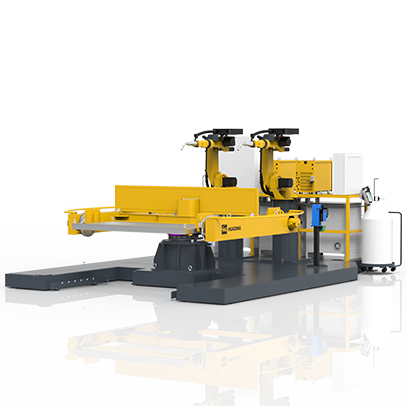
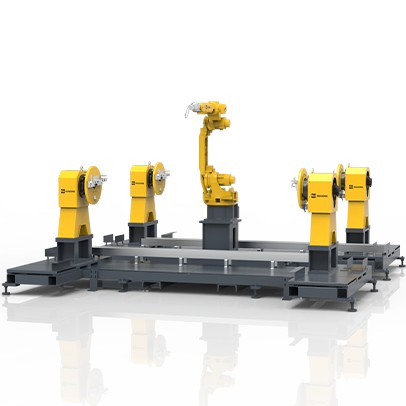
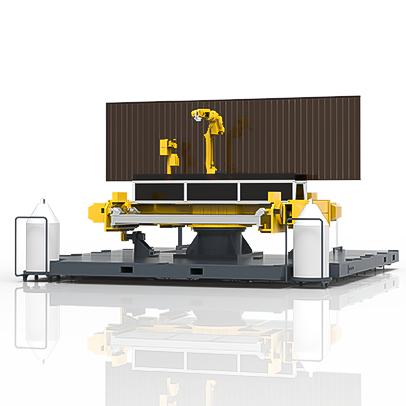
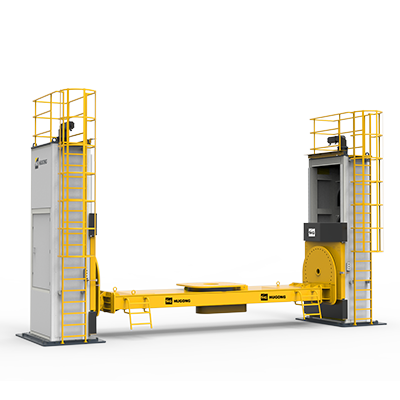
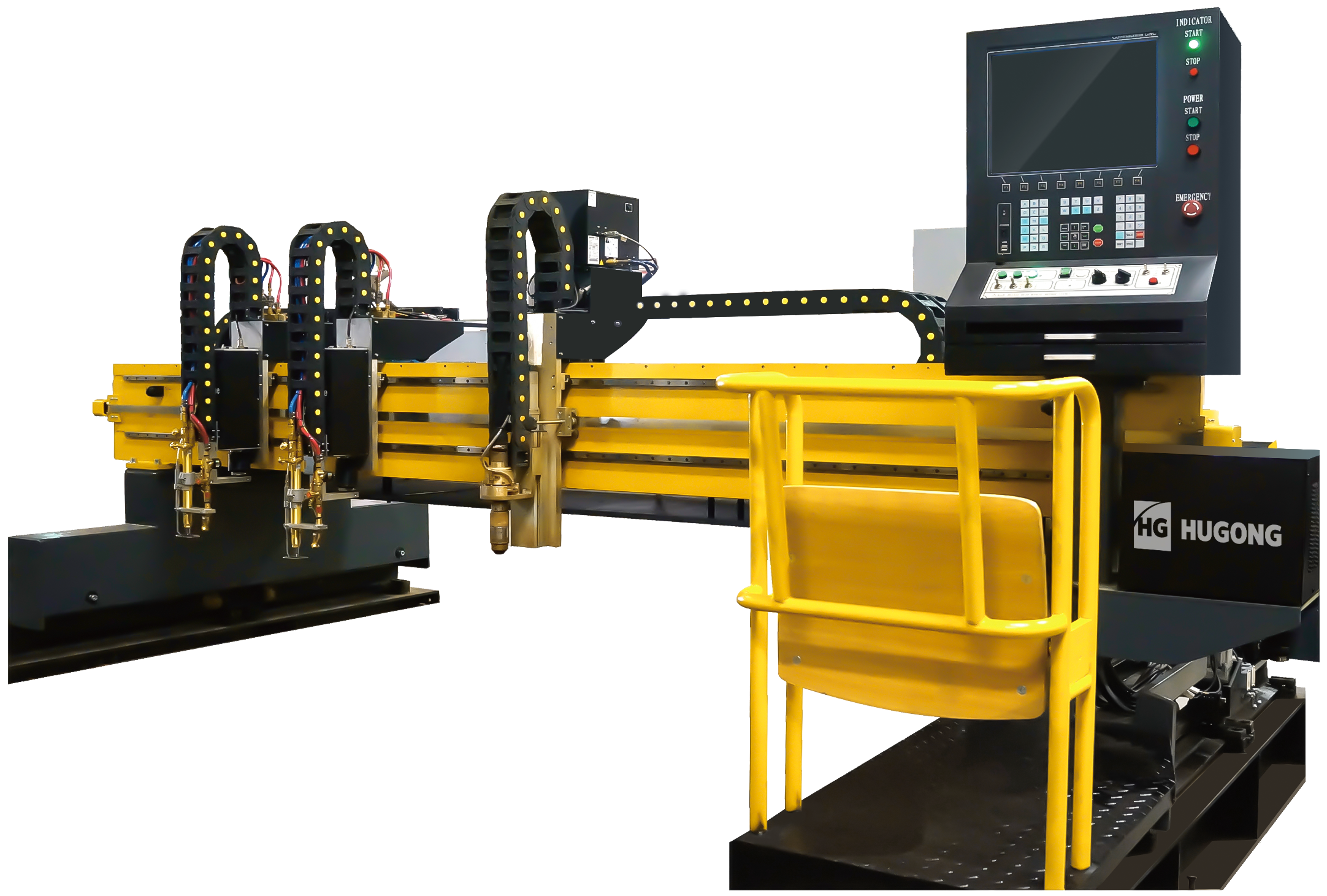
Designed for demanding industrial environments, the HUGONG MAXPIPE Series combines advanced CNC control technology with heavy-duty mechanical construction to deliver consistent, high-quality cutting results.
Key Specifications
| Feature | Specification |
|---|---|
| Pipe Diameter Range | Φ800–Φ2000 mm |
| Maximum Load Capacity | 15,000 kg |
| Cutting Thickness (Plasma) | 5–80 mm |
| Cutting Thickness (Flame) | Up to 300 mm |
| Plasma Cutting Speed | 500–2000 mm/min |
| Flame Cutting Speed | 100–750 mm/min |
| Axis Options | 3-Axis / 4-Axis / 5-Axis |
Key Advantages
• High-precision pipe intersection cutting – Saddle, fish-mouth, T-joint, and branch connections.
• Multi-angle bevel cutting – Single-V, double-V, J-groove, and compound angles.
• Plasma and flame compatibility – Maximum process flexibility in one machine.
• Heavy-duty structure – Engineered for 15,000 kg workpiece capacity.
• Flexible configuration – Choose 3, 4, or 5-axis control to match your applications.
Typical Applications
| Industry | Application |
|---|---|
| Oil & Gas | Pipeline transmission, refinery piping |
| LNG Terminals | Cryogenic pipe spools, transfer lines |
| Offshore Engineering | FPSO risers, subsea structures |
| Shipbuilding | Marine piping systems, rudder stocks |
| Steel Structure | Large-diameter tubular columns |
| Renewable Energy | Offshore wind turbine towers, hydrogen transport |
Comparison: HUGONG MAXPIPE vs. Leading Global Brands
For overseas buyers making a procurement decision, understanding how HUGONG positions against established European brands is valuable.
| Feature | HUGONG MAXPIPE | TRUMPF / Bystronic / BLM (European) |
|---|---|---|
| Price Point | Competitive | Premium (2–3× higher) |
| Lead Time | 4–6 weeks | 12–20+ weeks |
| Diameter Coverage | Φ800–Φ2000 mm | Φ800–Φ2500 mm (varies) |
| Axis Options | 3 / 4 / 5-Axis | 3 / 4 / 5-Axis |
| Plasma + Flame | Standard | Optional (higher cost) |
| Service Network | Growing global coverage | Established worldwide |
| Ideal For | Price-sensitive, large-scale production | High-end, specialized applications |
Value Proposition: HUGONG offers a competitive alternative for buyers seeking high-performance capability at a more accessible price point, with the flexibility to handle diverse applications in heavy fabrication environments.
FAQ
Q: What is the best cutting method for large-diameter pipes?
A: For most fabrication applications, plasma cutting delivers faster speeds and better cut quality for materials up to 80 mm. Flame cutting remains effective for very thick carbon steel (above 80 mm). A dual-process machine offers maximum flexibility.
Q: Can CNC pipe cutting machines handle bevel cutting?
A: Yes. Advanced 5-axis systems can perform multi-angle bevel cuts—including J-groove, single-V, double-V, and compound bevels—significantly improving weld preparation quality and reducing post-processing.
Q: What industries commonly use large-diameter CNC pipe cutting machines?
A: Primary industries include oil & gas pipeline fabrication, LNG terminal construction, offshore engineering, shipbuilding, pressure vessel manufacturing, steel structure fabrication, and renewable energy infrastructure projects.
Q: How much can automation improve fabrication productivity?
A: The improvement varies by application, but typical benefits include 40–60% reduction in manual marking and setup time, 30–50% reduction in grinding and rework, and 20–40% overall production cycle improvement, depending on the complexity of pipe assemblies.
Q: What are the top large-diameter pipe cutting machine manufacturers?
A: Leading European brands include TRUMPF, Bystronic, and BLM. HUGONG is a competitive Chinese manufacturer offering robust performance at a more accessible price point, with growing global service coverage.
Q: How do I choose between 3-axis and 5-axis?
A: If you process straight cuts and standard pipe ends, 3-axis is sufficient. If you require complex pipe intersections, multi-angle bevels, or advanced weld preparation, invest in 5-axis for long-term ROI.
Conclusion
As pipeline fabrication projects become larger and more complex, manufacturers need cutting solutions that deliver precision, efficiency, and reliability.
A modern Large Diameter CNC Pipe Cutting Machine can help:
• Reduce labor costs and dependence on skilled operators.
• Improve cut quality and fit-up accuracy.
• Accelerate project delivery and increase throughput.
• Position your shop for more complex, higher-value projects.
For fabricators seeking a heavy-duty solution capable of processing large-diameter pipes with high accuracy, the HUGONG MAXPIPE Series offers the performance and flexibility required for today's industrial manufacturing environment—at a competitive price point with growing global support.

 Address:7177 Waiqingsong Road.Qingpu District , Shanghai , PRC
 Post Code: 201700
 E-mail:sales@hugong.com
 Tel:0086-21-51211666
 Fax:+86-21-69715399


