

.jpg)

.jpg)
Collaborative Welding Robots: Benefits, Applications and ROI for Modern Fabrication
The global welding industry is undergoing a significant transformation. Manufacturers are facing increasing pressure to improve productivity, maintain consistent weld quality, and address the growing shortage of skilled welders. At the same time, customers demand shorter lead times, greater customization, and higher product quality than ever before.
Traditional manual welding and conventional robotic welding systems each have their limitations. Manual welding often struggles with labor availability and consistency, while traditional industrial robots can be expensive, complex to program, and difficult to justify for small-batch production.
This is where collaborative welding robots (welding cobots) are changing the game.
Collaborative welding robots combine the flexibility of manual welding with the repeatability of robotic automation, making them one of the fastest-growing technologies in modern fabrication. From structural steel workshops to construction machinery manufacturers, companies worldwide are increasingly adopting welding cobots to improve efficiency, reduce labor dependency, and remain competitive in a rapidly evolving market.
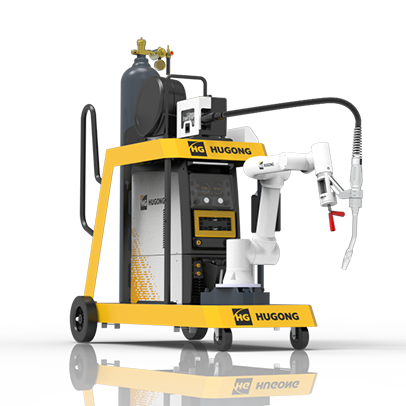
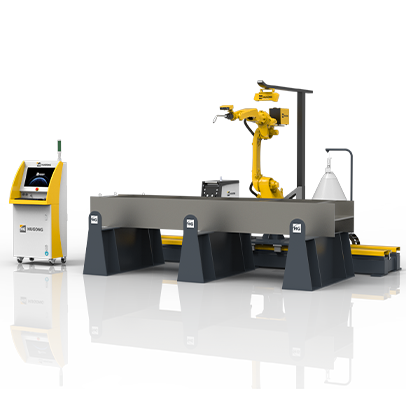
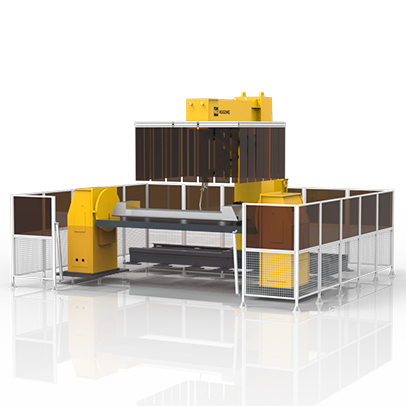
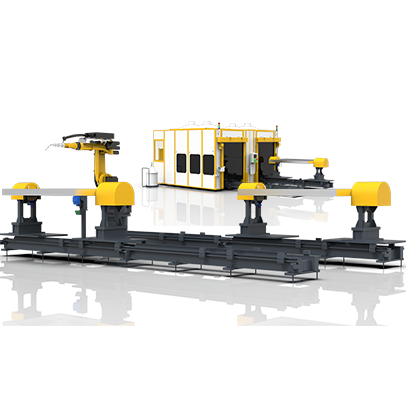
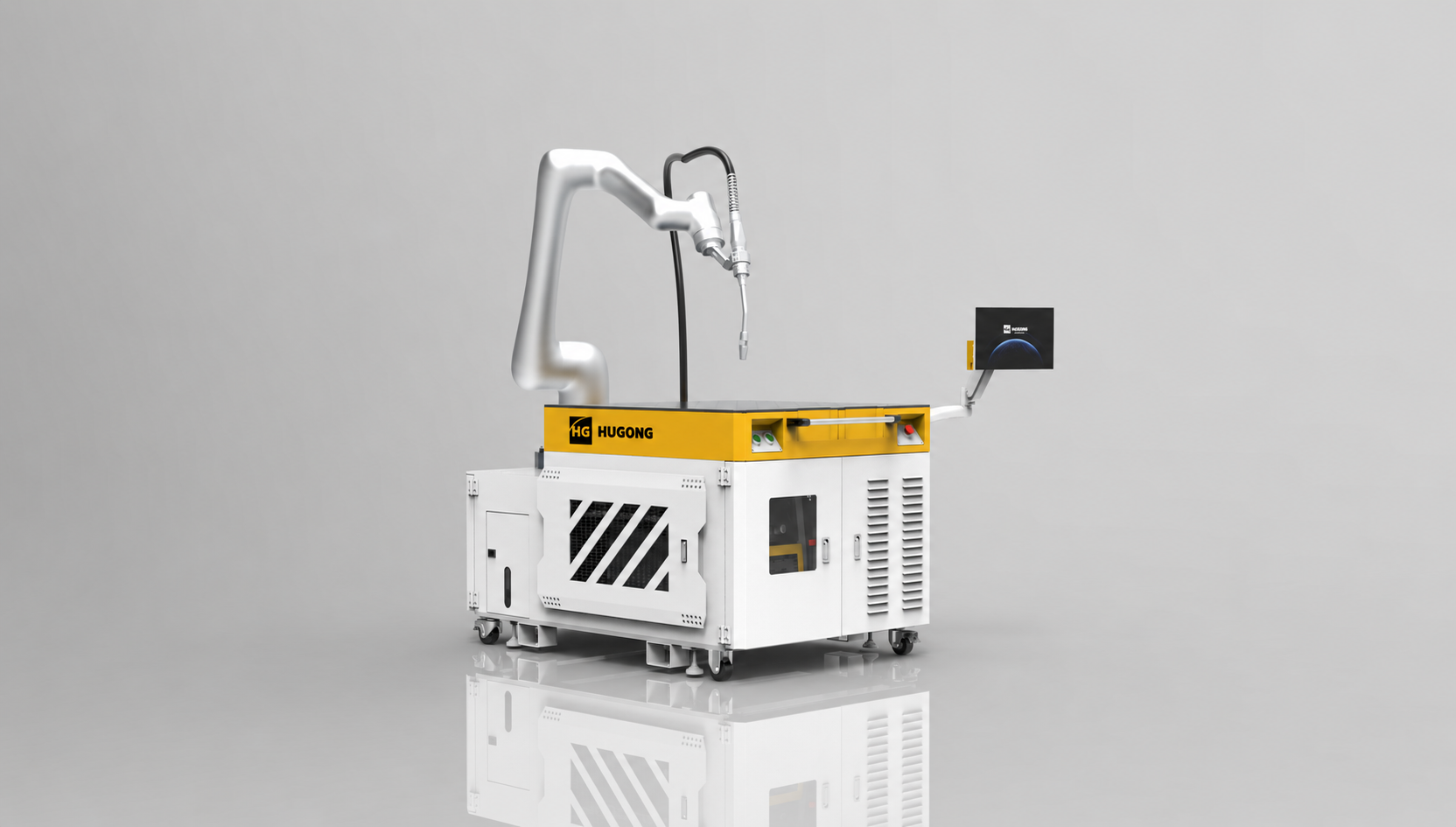
In this article, we explore the latest welding automation trends, the benefits of collaborative welding robots, common industry applications, expected return on investment (ROI), and how the HUGONG HGCR Series Collaborative Welding Robot helps manufacturers achieve smarter welding production.
The Growing Demand for Welding Automation
The Global Welding Labor Challenge
One of the biggest challenges facing manufacturers today is the shortage of qualified welders.
Across North America, Europe, Australia, and many emerging manufacturing markets, experienced welders are retiring faster than new workers are entering the trade. As a result, fabrication shops are experiencing:
1. Increased labor costs
2. Recruitment difficulties
3. Production bottlenecks
4. Extended lead times
5. Quality inconsistencies caused by workforce shortages
For many manufacturers, automation is no longer simply an option for increasing productivity—it has become a necessity for maintaining production capacity.
Rising Quality Expectations
Modern fabrication industries require:
1. Consistent weld penetration
2. Uniform weld appearance
3. Reduced rework rates
4. Improved traceability
5. Higher production efficiency
Even highly skilled welders may experience variations due to fatigue, changing work conditions, or repetitive tasks. Collaborative welding robots help eliminate these variables by delivering repeatable weld performance throughout every shift.
Growth of High-Mix, Low-Volume Manufacturing
Unlike automotive production lines, many fabrication companies produce:
1. Small batches
2. Custom products
3. Large structural components
4. Frequently changing workpieces
Traditional robotic welding systems often require extensive programming and setup time, making them less suitable for these environments.
Collaborative welding robots provide a more flexible automation solution that can quickly adapt to changing production requirements.
What Is a Collaborative Welding Robot?
A collaborative welding robot, commonly known as a welding cobot, is a robotic welding system designed to simplify automation and improve collaboration between humans and machines.
Unlike conventional industrial robots that often require specialized programming knowledge, welding cobots allow operators to manually guide the robot arm through the desired welding path. The system records the movement and automatically reproduces the weld trajectory with high precision.
This approach significantly reduces programming complexity while accelerating deployment.
Key advantages include:
✔ Simplified operation
✔ Faster setup
✔ Reduced training requirements
✔ Improved weld consistency
✔ Flexible deployment
✔ Lower automation barriers for small and medium-sized manufacturers
Collaborative Welding Robots vs Traditional Industrial Robots
One of the main reasons collaborative welding robots are gaining popularity is their ability to provide automation without the complexity associated with traditional robotic systems.
| Feature | Collaborative Welding Robot | Traditional Industrial Robot |
|---|---|---|
| Programming | Drag-and-teach | Complex offline programming |
| Installation | Quick deployment | Longer implementation time |
| Operator Training | Minimal | Specialized training required |
| Production Flexibility | Excellent | Moderate |
| Small Batch Production | Ideal | Less efficient |
| Initial Investment | Lower | Higher |
| Changeover Time | Fast | Longer |
| Ease of Use | User-friendly | Engineering-oriented |
For fabrication shops handling multiple product types and smaller production volumes, collaborative welding robots often provide a faster path to automation and ROI.
Common Welding Challenges Facing Fabricators
Many manufacturers face similar welding-related challenges:
Skilled Welder Shortages
Difficulty hiring experienced welders limits production growth.
Inconsistent Weld Quality
Variations between operators can lead to defects, rework, and customer complaints.
Rising Production Costs
Labor costs continue to increase in many manufacturing regions.
Production Bottlenecks
Manual welding frequently becomes the limiting factor in production capacity.
Difficulty Scaling Operations
Expanding output often requires recruiting additional welders, which may not be feasible.
Collaborative welding automation addresses these issues by improving consistency, increasing arc-on time, and reducing dependence on manual labor.
Key Applications of Collaborative Welding Robots
Structural Steel Fabrication
Structural steel manufacturers often produce large components with repetitive weld seams.
Typical applications include:
1. Steel columns
2. Beams
3. Frames
4. Bridges
5. Building structures
Collaborative welding robots improve productivity while maintaining weld quality across long production runs.
Construction Machinery Manufacturing
Heavy equipment manufacturers require high-strength welds on complex components.
Applications include:
1. Excavator frames
2. Loader attachments
3. Chassis assemblies
4. Boom structures
Welding cobots help ensure consistent weld quality while reducing operator workload.
Agricultural Equipment Production
Agricultural machinery manufacturers often handle a variety of product configurations.
Collaborative welding systems provide the flexibility needed to automate diverse welding tasks without lengthy reprogramming.
Metal Furniture and Custom Fabrication
Small-batch production environments benefit significantly from drag-and-teach programming, allowing rapid transitions between different products.
Pressure Vessels and Heavy Fabrication
For thick material applications requiring multi-layer and multi-pass welding, collaborative robots provide repeatable weld quality and improved process stability.
How Collaborative Welding Robots Improve ROI
For many manufacturers, the decision to invest in welding automation depends on return on investment.
A collaborative welding robot can improve ROI through several factors:
Reduced Labor Dependency
One operator can oversee multiple welding processes, reducing labor pressure.
Increased Arc-On Time
Robots spend more time welding and less time on non-productive activities.
Reduced Rework
Consistent welding parameters help minimize defects and repair costs.
Improved Throughput
Automated welding allows manufacturers to complete more work within the same production timeframe.
Better Resource Utilization
Experienced welders can focus on complex tasks while repetitive welding is automated.
Depending on production volume, labor costs, and application complexity, many fabrication shops achieve ROI within one to two years.
Introducing the HUGONG HGCR Series Collaborative Welding Robot
Flexible Automation for Modern Fabrication
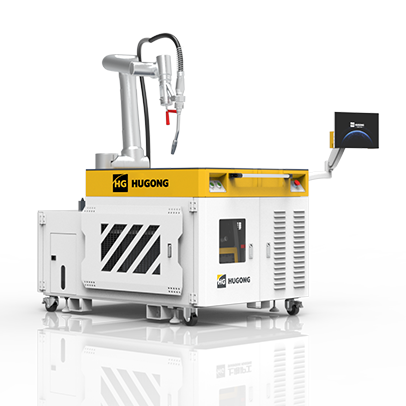
The HUGONG HGCR Series Collaborative Welding Robot is designed to help manufacturers adopt robotic welding quickly and efficiently.
The series includes:
• HGCR-603
• HGCR-905
• HGCR-1410
These models provide varying working ranges and payload capacities to meet the requirements of different welding applications.
Technical Specifications
| Model | HGCR-603 | HGCR-905 | HGCR-1410 |
|---|---|---|---|
| Arm Weight | 15 kg | 22 kg | 40 kg |
| Working Radius | ≤622 mm | ≤922 mm | ≤1400 mm |
| Maximum Load Capacity | 3 kg | 5 kg | 10 kg |
| Repeat Positioning Accuracy | ±0.02 mm | ±0.03 mm | ±0.05 mm |
| Power Supply | 100-240V, 50/60Hz | 100-240V, 50/60Hz | 100-240V, 50/60Hz |
Drag-and-Teach Programming
The HGCR Series supports intuitive manual guidance programming.
Operators can:
• Drag the robot arm along the weld path
• Record welding trajectories
• Create programs without complex coding
• Reduce setup time significantly
This allows manufacturers to deploy robotic welding even without dedicated robotics engineers.
Multiple Welding Functions
The system supports various welding applications, including:
• Butt welding
• Fillet welding
• Lap welding
• Circumferential welding
• Swing welding
• Multi-layer multi-pass welding
• Intermittent welding
This versatility enables manufacturers to automate a wide range of welding tasks.
High Positioning Accuracy
The HGCR Series provides repeat positioning accuracy up to ±0.02 mm, helping manufacturers achieve:
• Stable weld quality
• Improved repeatability
• Reduced defects
• Better weld appearance
Smart Welding Features
The system includes:
• Autonomous planning
• Arc tracking
• Process parameter management
• Self-diagnostic functions
• Operation monitoring
• Manual wire feeding support
These features improve usability while ensuring reliable production performance.
Flexible Power Source Compatibility
The HGCR Series can be configured with multiple process options, including:
MIG/MAG Welding
Ideal for:
• Structural fabrication
• Manufacturing production
• Heavy-duty welding applications
TIG Welding
Suitable for:
• Stainless steel
• Aluminum
• Precision fabrication
Plasma Cutting Integration
Provides additional flexibility for metal processing applications.
Laser Welding Integration
Supports advanced manufacturing requirements where speed and weld appearance are critical.
Why Collaborative Welding Robots Are the Future of Fabrication
The next generation of manufacturing is increasingly focused on:
• Smart factories
• Flexible automation
• Human-robot collaboration
• Digital manufacturing
• Intelligent welding processes
Collaborative welding robots fit perfectly into this transition because they combine productivity gains with operational flexibility.
Rather than replacing skilled welders, welding cobots allow companies to maximize workforce efficiency by automating repetitive welding operations while enabling operators to focus on higher-value tasks.
As fabrication industries continue to modernize, collaborative welding automation is expected to become a standard production tool rather than a specialized technology.
FAQ
1.What is a collaborative welding robot?
A collaborative welding robot is an automation system that allows operators to program welding paths through manual guidance while delivering repeatable robotic welding performance.
2. Is a welding cobot suitable for small-batch production?
Yes. Collaborative welding robots are particularly effective in high-mix, low-volume manufacturing environments where products frequently change.
3. What welding processes can collaborative robots support?
Depending on the power source configuration, collaborative welding robots can support MIG, MAG, TIG, plasma, and laser welding applications.
4. How accurate is a collaborative welding robot?
Modern welding cobots typically offer repeat positioning accuracy ranging from ±0.02 mm to ±0.05 mm, depending on the model.
5. Which industries benefit most from welding cobots?
Industries including structural steel fabrication, construction machinery, agricultural equipment, pressure vessels, metal furniture, and custom fabrication can benefit significantly from collaborative welding automation.
Conclusion
As manufacturers face increasing labor shortages, rising production costs, and higher quality expectations, collaborative welding robots are emerging as one of the most practical and cost-effective automation solutions available today.
By combining easy programming, flexible deployment, high precision, and excellent adaptability for small-batch production, welding cobots help manufacturers improve productivity without sacrificing operational flexibility.
The HUGONG HGCR Series Collaborative Welding Robot is designed to meet these evolving industry needs, providing an accessible path toward welding automation for fabrication shops, machinery manufacturers, and industrial producers worldwide.

 Address:7177 Waiqingsong Road.Qingpu District , Shanghai , PRC
 Post Code: 201700
 E-mail:sales@hugong.com
 Tel:0086-21-51211666
 Fax:+86-21-69715399


