





The global metal fabrication industry is undergoing changes in production methods and equipment requirements. As manufacturers handle increasingly diverse orders, varying material specifications and more specialized processing tasks, flexibility has become an important consideration in workshop planning and equipment investment.
For many fabrication businesses, the challenge is no longer simply finding equipment for a single operation. It is also about managing different processing requirements, making better use of available production resources and adapting to changing customer demands.
Against this background, multifunctional laser technology is becoming an increasingly relevant part of modern metal fabrication.
The Changing Landscape of Metal Fabrication
Across international markets, manufacturers serve a wide range of industries, from general metal fabrication and machinery manufacturing to automotive components and energy-related production.
These sectors have different processing requirements but share a common challenge: maintaining production flexibility while managing equipment costs and operational complexity.
Traditional production setups often rely on separate machines for different processes. As product variations increase and production batches become more diverse, managing multiple pieces of equipment can present additional challenges for smaller workshops and manufacturers with limited
production space.
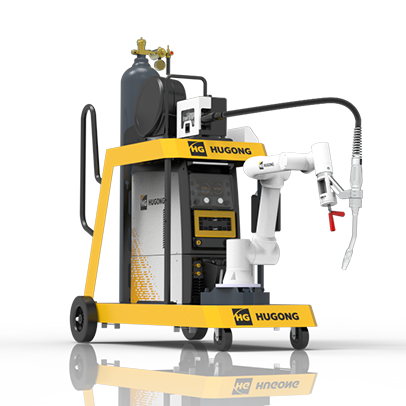
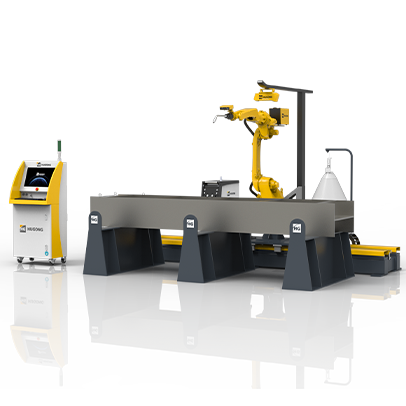
This has encouraged greater interest in integrated processing solutions. Multifunctional equipment offers another approach, allowing businesses to consider a wider range of applications within a more consolidated production setup.
HUGONG Expands Its Handheld Laser Product Line
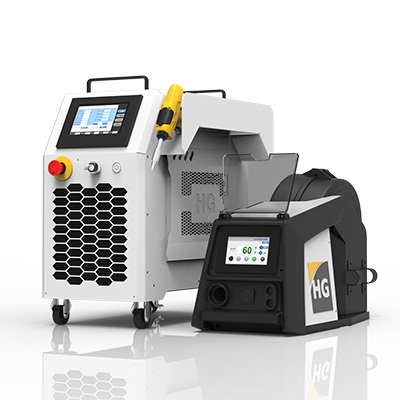
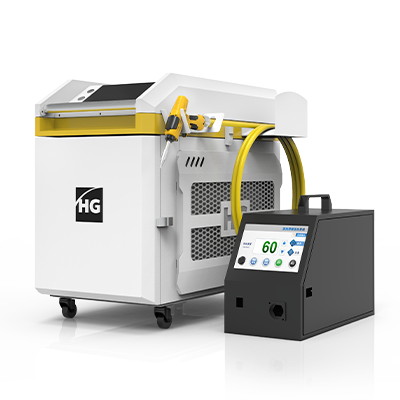
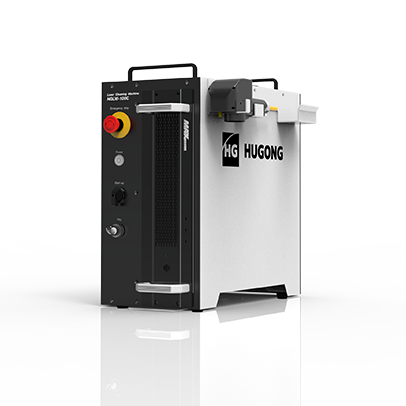
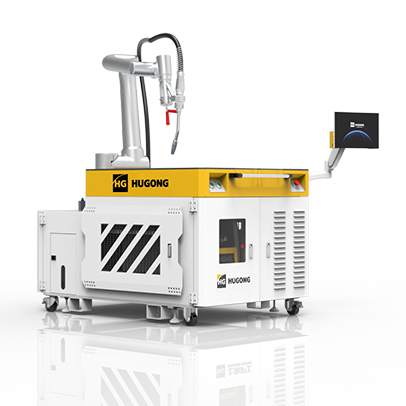
In response to evolving metal processing requirements, HUGONG has introduced a new five-in-one handheld fiber laser machine series, integrating welding, cleaning, cutting, seam cleaning and energy storage welding into one system.
The new series includes three models: HGLW1500EP, HGLW2000EP and HGLW3000EP, with power options ranging from 1500W to 3000W.
The different configurations address varying processing requirements. According to the product specifications, the applicable sheet thickness ranges from 1–5 mm for stainless steel and mild steel, and 1–3 mm for aluminum on the 1500W model, extending to 1–8 mm and 1–5 mm respectively on the 3000W model.
Beyond its multifunctional design, the series also incorporates features intended to support everyday operation. Its expert database provides 60 graphic combinations and 288 process parameter sets, offering operators more options for different processing applications. A user-friendly controller and large LCD touchscreen make operation and information viewing more straightforward, while an independent gun body switch adds convenience during operation.
Safety is another consideration in the machine design, with multiple protection and warning functions, including overheat protection, chiller protection, and laser and gas warnings.
Why Process Integration Matters
The growing interest in multifunctional equipment is closely connected to broader changes in manufacturing.
Shorter production runs, customized orders and increasingly varied component requirements mean that manufacturers must remain adaptable. Equipment that can accommodate different tasks may help simplify workshop planning and reduce the need to configure separate machines for every application.
However, process integration is not simply about combining more functions into one system. Material compatibility, processing quality, operating requirements and equipment suitability remain essential considerations.
For laser equipment manufacturers, the challenge is to develop solutions that balance versatility with practical performance across different applications.
Looking Beyond Individual Processing Applications
The development of energy storage manufacturing, continued demand for customized metal products and the ongoing modernization of fabrication workshops are creating diverse opportunities for laser processing technologies.
These developments also highlight the importance of understanding how equipment can respond to different industry requirements rather than focusing exclusively on individual processing functions.
For HUGONG, expanding its handheld laser product line is part of its ongoing effort to explore more versatile laser processing solutions for international markets.
As manufacturing requirements continue to evolve, HUGONG will continue to follow industry developments and expand its product offerings to address the changing needs of metal fabrication businesses worldwide.

 Address:7177 Waiqingsong Road.Qingpu District , Shanghai , PRC
 Post Code: 201700
 E-mail:sales@hugong.com
 Tel:0086-21-51211666
 Fax:+86-21-69715399


